Socks Market: Trends, Growth Drivers, and Global Outlook 2036
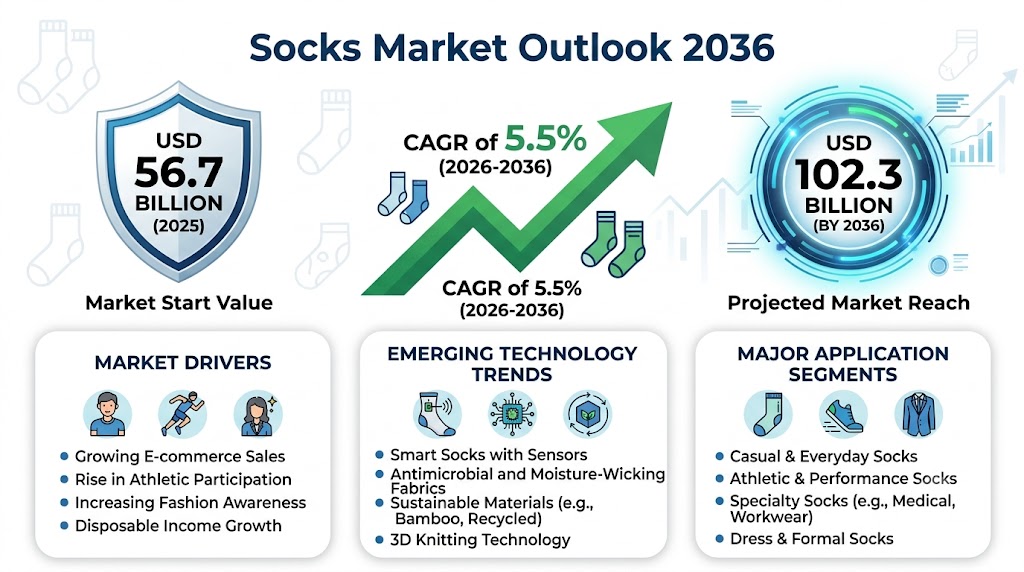
The global socks market was valued at US$ 56.7 billion in 2025 and is projected to reach US$ 102.3 billion by 2036, expanding at a CAGR of 5.5% from 2026 to 2036.
Pune, Maharashtra, India, October 27, 2026 pressrelease.in - The global socks market is experiencing consistent growth as consumers increasingly prioritize comfort, performance, style, and foot health in their everyday apparel choices. Socks have evolved from basic clothing essentials into specialized products designed for athletic performance, professional wear, casual fashion, and therapeutic applications. Innovations in textile materials, changing fashion preferences, and expanding online retail channels are transforming the competitive landscape.
The global socks market was valued at US$ 56.7 billion in 2025 and is projected to reach US$ 102.3 billion by 2036, registering a compound annual growth rate (CAGR) of 5.5% during the forecast period from 2026 to 2036. Growth is supported by increasing sports participation, rising disposable incomes, growing awareness of foot hygiene, and demand for premium and sustainable textile products.
Athletic socks represent a significant product category, supported by the popularity of running, gym workouts, cycling, hiking, and other physical activities. Meanwhile, therapeutic and compression socks are gaining attention among consumers seeking specialized support for circulation, diabetes-related foot care, and prolonged sitting or standing. Manufacturers are responding with products that combine functionality, durability, and contemporary designs.
Asia Pacific held the largest regional revenue share of 37.2% in 2025, benefiting from its extensive textile manufacturing capabilities, large consumer base, and growing demand for branded apparel. The region's expanding e-commerce ecosystem and increasing adoption of active lifestyles are also creating opportunities for established brands and emerging manufacturers.
Key Growth Drivers of the Socks Market
Rising Participation in Sports and Fitness Activities
Increasing participation in sports, exercise, and outdoor recreation is a major driver of the socks market. Consumers are investing in specialized athletic apparel that supports comfort and performance during physical activities. Athletic socks featuring cushioning, arch support, moisture-wicking fabrics, ventilation zones, and blister-reduction designs are becoming increasingly popular among professional athletes and recreational fitness enthusiasts.
The growth of running clubs, marathons, fitness centers, cycling events, and hiking activities is supporting demand for application-specific socks. Unlike conventional everyday products, performance socks are often designed to meet the requirements of particular sports, encouraging consumers to purchase multiple varieties.
Sportswear manufacturers are strengthening their product portfolios through advanced knitting technologies, ergonomic designs, and technical yarn blends. Brands such as Nike, Inc., Adidas AG, PUMA SE, and Under Armour, Inc. benefit from their established sportswear ecosystems and strong brand recognition.
The integration of performance socks with athletic footwear and apparel collections is further increasing product visibility. As fitness culture expands across emerging and developed economies, athletic socks are expected to remain an important contributor to market growth.
Growing Demand for Sustainable and Advanced Materials
Sustainability is becoming an important consideration in the global socks market. Consumers are increasingly interested in products manufactured using organic cotton, recycled polyester, responsibly sourced wool, bamboo-derived fibers, and other materials associated with lower environmental impacts.
Manufacturers are investing in textile innovations that balance sustainability with comfort, elasticity, durability, and moisture management. Advanced fiber blends and improved knitting techniques can help extend product life while supporting the development of lightweight and breathable socks.
Material innovation also includes antimicrobial treatments, odor-control technologies, seamless toe construction, and temperature-regulating fabrics. These features appeal to consumers seeking enhanced comfort during everyday activities, work, travel, and exercise.
Brands are also using digital platforms to communicate product composition and sustainability attributes. Clear product information helps consumers compare alternatives and make more informed purchasing decisions.
However, sustainable manufacturing can involve higher material and production costs. Companies that successfully combine competitive pricing with responsible sourcing and dependable product performance may strengthen customer loyalty and differentiate themselves in a crowded marketplace.
Emerging Opportunities in Medical and Therapeutic Socks
Medical, compression, and therapeutic socks represent a promising opportunity for manufacturers seeking to diversify beyond conventional apparel categories. Growing awareness of foot health, an aging population, and demand for specialized comfort products are supporting interest in socks designed for specific health-related needs.
Compression socks are commonly used to support circulation in appropriate circumstances, including certain travel and occupational settings. Therapeutic products may also include diabetic-friendly socks featuring non-binding tops, smooth seams, soft materials, and designs intended to reduce friction and pressure.
Consumers who spend extended periods standing, sitting, or traveling are increasingly interested in products that help improve comfort. Pharmacies, medical supply retailers, specialty stores, and online marketplaces provide additional channels for reaching these customers.
Manufacturers can capitalize on this opportunity by developing products tailored to different consumer requirements and working with qualified healthcare professionals to communicate appropriate uses. Clear labeling and evidence-based product claims are especially important in this category.
The expansion of wellness-oriented retail and direct-to-consumer platforms may further support the adoption of specialized socks. By combining functional design with accessible pricing and consumer education, companies can strengthen their presence in this developing segment.
Market Segmentation Analysis
By Type: Athletic Socks Lead the Market
Athletic socks accounted for 27.6% of the global socks market in 2025, supported by increasing participation in sports and fitness activities. These products are designed to provide cushioning, moisture control, support, and durability during physical exercise.
Formal socks continue to serve professional and business environments, while casual socks benefit from everyday usage and changing fashion preferences. Multiple toe socks appeal to consumers seeking toe separation and specialized fit, particularly for selected sports and recreational activities.
Therapeutic socks serve consumers looking for additional comfort and specialized foot-care features. Other categories, including ankle socks and no-show socks, benefit from demand for versatile designs that complement sneakers and contemporary footwear.
Product differentiation, fashion trends, and improvements in fabric technology are expected to influence purchasing decisions across all categories.
By Material: Cotton, Nylon, and Wool
Cotton remains an important material because of its softness, familiarity, and suitability for everyday wear. Cotton socks are widely used across casual, formal, and children's categories, although their moisture-management performance depends on construction and fiber blends.
Nylon is valued for its strength, elasticity, abrasion resistance, and ability to improve the durability of blended fabrics. It is frequently incorporated into athletic and performance socks to support fit and wear resistance.
Wool, including merino wool, is used in products designed for temperature regulation, outdoor recreation, and cold-weather comfort. Manufacturers are also exploring bamboo-derived fibers, recycled materials, and specialized yarn combinations to expand their sustainable and performance-oriented offerings.
The selection of materials will continue to depend on product purpose, price positioning, durability requirements, and consumer preferences.
Regional Outlook of the Socks Market
Asia Pacific
Asia Pacific dominated the global socks market in 2025, accounting for 37.2% of revenue. The region benefits from established textile manufacturing networks, competitive production capabilities, and a large population of consumers across different income groups.
China, India, Bangladesh, Vietnam, Japan, and South Korea contribute to the regional market through manufacturing, exports, branded apparel consumption, and retail development. Rising urbanization and growing participation in fitness activities are supporting demand for athletic and casual socks.
E-commerce platforms are also increasing the availability of specialized and branded products across metropolitan and smaller cities. Manufacturers that combine efficient production with product innovation and strong digital distribution are positioned to benefit from regional opportunities.
North America
North America represents an important market for premium, athletic, outdoor, and wellness-oriented socks. Consumers' interest in sportswear, recreational activities, and specialized performance apparel supports demand for products featuring cushioning, moisture management, and durability.
Established brands benefit from strong retail networks, digital marketing, and direct-to-consumer channels. Demand for sustainable materials and differentiated designs is also encouraging manufacturers to introduce new product collections.
Europe
Europe offers opportunities through its established fashion industry, consumer interest in premium apparel, and growing attention to sustainable textiles. Formal socks, designer products, outdoor-performance socks, and products made with responsibly sourced materials contribute to regional demand.
Manufacturers are increasingly focused on product quality, design differentiation, and supply-chain transparency. The region's varied climate and diverse fashion preferences also support demand for different sock lengths, materials, and seasonal collections.
Latin America and the Middle East & Africa
Latin America is benefiting from expanding urban retail markets, sports participation, and greater access to branded apparel. Online shopping and changing consumer preferences are creating opportunities for both international brands and regional manufacturers.
In the Middle East and Africa, population growth, urbanization, expanding retail infrastructure, and increasing access to e-commerce are supporting market development. Demand varies according to climate, income levels, and local clothing preferences, creating opportunities for lightweight, breathable, durable, and affordable products.
Competitive Landscape and Key Players
The global socks market includes established sportswear brands, hosiery manufacturers, specialty sock companies, and diversified apparel groups. Companies compete through product innovation, brand positioning, pricing, distribution reach, and the ability to respond to changing consumer preferences.
Major players include Adidas AG, ASICS Corporation, Bombas, Inc., Darn Tough Vermont, Inc., FALKE KGaA, Gildan Activewear Inc., Golden Lady Company S.p.A., Hanesbrands Inc., Happy Socks AB, Nike, Inc., PUMA SE, Stance, LLC, Under Armour, Inc., VF Corporation, and Wigwam Mills, Inc.
Leading manufacturers are investing in advanced materials, performance-oriented designs, sustainable product lines, and digital sales channels. Sportswear brands leverage their existing footwear and apparel portfolios to promote coordinated product collections, while specialty manufacturers differentiate themselves through durability, comfort, and specific functional benefits.
Private-label products and regional brands also contribute to competitive pressure, particularly in basic and value-oriented segments. Manufacturers must balance production efficiency with quality, innovation, and effective inventory management to remain competitive.
Trends Shaping the Future of the Socks Market
Premiumization and Product Personalization
Consumers are increasingly seeking products that combine comfort, distinctive designs, and specialized performance features. Premium socks with reinforced heels and toes, seamless construction, anatomical fits, and advanced moisture management are attracting attention.
Personalized designs, limited-edition collections, and collaborations with sports teams or fashion brands also create opportunities for differentiation. These strategies allow manufacturers to strengthen brand recognition and encourage repeat purchases.
Expansion of E-Commerce and Direct-to-Consumer Sales
Online retail is reshaping the way consumers discover and purchase socks. Digital platforms provide access to a wider range of sizes, colors, materials, and functional designs than may be available in individual physical stores.
Customer reviews, product comparisons, subscription offerings, and multipack promotions can encourage purchasing and improve convenience. Direct-to-consumer channels also enable manufacturers to gather feedback and respond more quickly to emerging preferences.
Innovation in Textile Manufacturing
Developments in circular knitting, digital design, automated production, and yarn engineering are creating opportunities to improve manufacturing efficiency and product consistency.
Advanced knitting technologies can support targeted cushioning, ventilation zones, and improved anatomical fit. At the same time, manufacturing improvements that reduce fabric waste and material consumption may help companies address cost pressures and sustainability goals.
Challenges Facing the Socks Market
Despite favorable growth prospects, the socks market faces several challenges. Intense competition from established brands, private-label manufacturers, and low-cost producers can put pressure on pricing and profit margins.
Raw material price fluctuations may affect cotton, wool, nylon, and synthetic fiber costs. Manufacturers must also manage production expenses, transportation costs, inventory requirements, and changing consumer demand.
Fast-changing fashion preferences can create risks related to excess inventory and unsold seasonal products. Companies operating across multiple markets must adapt product ranges to different climates, sizing preferences, and consumer expectations.
Sustainability presents both an opportunity and a challenge. Responsible sourcing, recycling, and improved production processes may require investment, while manufacturers must ensure that environmental claims are accurate and supported by appropriate evidence.
Addressing these challenges will require efficient supply chains, reliable quality control, flexible product development, and a balanced approach to pricing and innovation.
Future Outlook
The global socks market is expected to maintain steady growth through 2036 as socks become increasingly associated with athletic performance, fashion, comfort, and specialized foot care. Expanding fitness participation, rising demand for advanced textile materials, and growing access to online retail are expected to support demand across major product categories.
Athletic socks are likely to remain an important segment, while therapeutic and wellness-oriented products offer opportunities for manufacturers targeting specific consumer needs. Sustainable fibers, improved knitting technologies, and differentiated product designs may further influence competition.
Asia Pacific is expected to remain a significant market because of its manufacturing capabilities and expanding consumer base. Meanwhile, North America and Europe will continue to offer opportunities in premium, performance-oriented, and sustainable products.
Companies that combine material innovation, dependable quality, competitive pricing, and effective digital distribution are likely to be better positioned to capitalize on evolving consumer preferences.
Overall, the projected increase in market value from US$ 56.7 billion in 2025 to US$ 102.3 billion by 2036 highlights the long-term potential of the global socks industry. Continued product innovation and the growing importance of comfort, functionality, and sustainability are expected to shape its development throughout the forecast period.
Ajay Ramesh mhatale
TMR