How to Calculate Cut-Off Frequency for Anechoic Chambers?
At Envirotech Systems Limited, we specialize in advanced acoustic solutions, including anechoic chambers designed for noise measurement, product testing, sound analysis, and research applications.
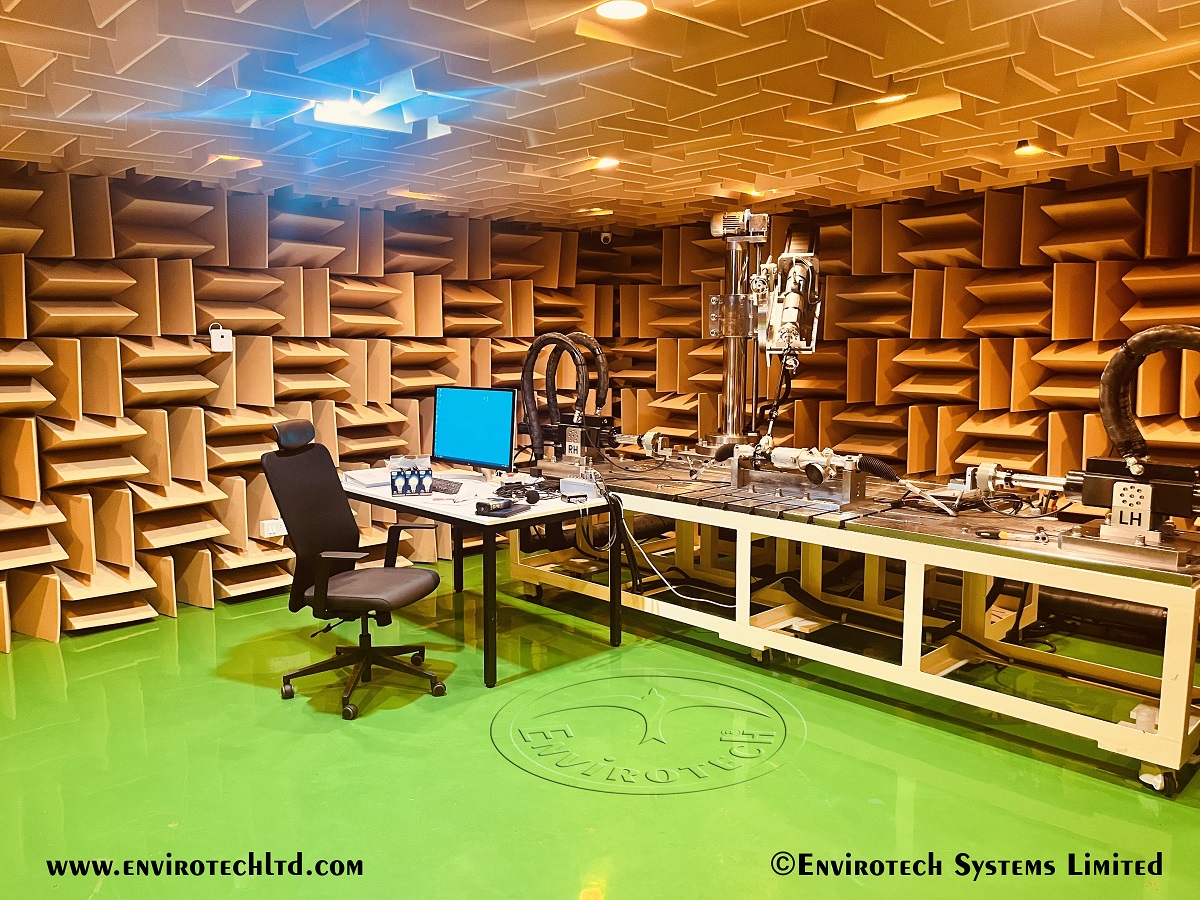
Noida, Uttar Pradesh, India, October 14, 2026 pressrelease.in - Envirotech Anechoic Chamber is a specially designed acoustic testing room that minimizes sound reflections from walls, ceilings, and floors. One of the most important parameters in an anechoic chamber is the cut-off frequency, which determines the lowest frequency at which the chamber can provide suitable free-field acoustic conditions.
At Envirotech Systems Limited, we specialize in advanced acoustic solutions, including anechoic chambers designed for noise measurement, product testing, sound analysis, and research applications.
What Is the Cut-Off Frequency of an Anechoic Chamber?
The cut-off frequency is the lowest frequency at which an anechoic chamber can effectively absorb sound reflections and simulate a free-field environment within the required measurement area. It depends on the acoustic absorber design, wedge dimensions, chamber geometry, and the required testing accuracy.
A lower cut-off frequency generally requires deeper sound-absorbing wedges and careful acoustic design.
How to Calculate Cut-Off Frequency for an Anechoic Chamber?
The cut-off frequency can be estimated using the relationship between sound wavelength and the effective depth of the acoustic absorber.
Formula:
[ f_c \approx \frac{c}{4d} ]
Where:
(f_c) = Estimated cut-off frequency in Hz
(c) = Speed of sound in air, approximately 343 m/s at 20°C
(d) = Effective absorber depth in metres
Example Calculation
Suppose an anechoic chamber uses acoustic wedges with an effective depth of 0.5 metres.
Using the formula:
[ f_c \approx \frac{343}{4 \times 0.5} ]
[ f_c \approx 171.5\text{ Hz} ]
Therefore, the estimated cut-off frequency is approximately 172 Hz.
Note: This is a simplified quarter-wavelength estimate, not a guaranteed chamber performance value. Actual cut-off frequency depends on the absorber's acoustic properties, wedge geometry, termination, and the applicable testing standard. Manufacturer data and acoustic validation are necessary to establish the final performance.
Factors Affecting Anechoic Chamber Cut-Off Frequency
Several factors influence the cut-off frequency of an anechoic chamber. These include absorber or wedge depth, the sound absorption characteristics of the material, chamber dimensions, the required free-field region, and the intended testing application.
For low-frequency acoustic testing, deeper absorbers are generally required. Proper chamber design and verification help achieve reliable measurement results across the intended frequency range.
Applications of Anechoic Chambers
Anechoic chambers are widely used for acoustic and noise testing in industries such as automotive, aerospace, electronics, electrical equipment, telecommunications, and research and development. They support sound power measurements, microphone testing, speaker testing, product noise analysis, and other specialized acoustic evaluations.
Anechoic Chamber Manufacturer in India – Envirotech Systems Limited
Envirotech Systems Limited provides specialized acoustic solutions for industrial, commercial, and research applications. Our anechoic chamber solutions are designed around project-specific requirements, including the target frequency range, acoustic absorption performance, equipment dimensions, and testing objectives.
Whether you require an anechoic chamber for product development, noise measurement, or laboratory testing, our team can help identify the appropriate acoustic design for your application.
Contact Envirotech Systems Limited to discuss your anechoic chamber requirements and acoustic testing needs.
Frequently Asked Questions
1. What is the cut-off frequency in an anechoic chamber?
It is the lowest frequency at which a chamber is designed to meet its specified acoustic performance requirements.
2. How does absorber depth affect cut-off frequency?
Generally, increasing absorber depth allows effective absorption at lower frequencies, subject to the absorber design and material properties.
3. Can cut-off frequency be calculated using a simple formula?
A quarter-wavelength formula provides an initial estimate, but the final value should be established using acoustic design calculations, manufacturer data, and appropriate chamber validation.
4. Who manufactures anechoic chambers in India?
Envirotech Systems Limited provides specialized acoustic solutions, including anechoic chambers designed for specific testing and measurement requirements.
Anechoic Chamber Manufacturer in India
Calculating the cut-off frequency is an important step in anechoic chamber design. Although the quarter-wavelength formula provides a useful starting point, the final design must account for absorber characteristics, chamber geometry, and the intended measurement standards. Envirotech Systems Limited can help you evaluate your acoustic testing requirements and plan a suitable anechoic chamber solution.
Anechoic Chamber Manufacturer in India
Amit Singh
Envirotech Systems Limited